How Euclid traveled to Islam: the House of Wisdom and Islamic mathematics
The 9th-century Bayt al-Hikma in Baghdad translated Greek mathematics into Arabic, laying the intellectual foundation for Islamic geometric art.
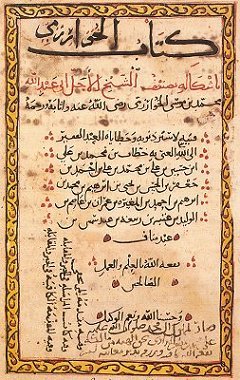
Islamic geometric art is mathematical. The patterns are tessellations conforming to specific symmetry groups, built using base angles in multiples of 22.5°, derivable from the sine rule, and (as the 2007 Lu and Steinhardt paper showed) capable of producing quasi-crystalline tilings 500 years before Western mathematics formalized them. None of this mathematical sophistication appeared from nowhere. It rested on an intellectual foundation built deliberately, between roughly 800 and 1000 CE, when the Abbasid Caliphate in Baghdad organized one of the largest translation projects in history, importing Greek, Persian, and Indian mathematical and scientific knowledge into Arabic. That institution was called the Bayt al-Hikma — the House of Wisdom. This is the story of how Euclid's Elements, written in Alexandria around 300 BCE, traveled through Greek and Syriac scholars into 9th-century Baghdad, then into the Islamic world, and eventually became part of the intellectual infrastructure that produced the Alhambra, the Topkapı Scroll, and the Persian girih tradition.
The substance draws on Jim Al-Khalili's Pathfinders: The Golden Age of Arabic Science (2012), the relevant chapters of Wichmann and Wade's book, and De Lacy O'Leary's classic How Greek Science Passed to the Arabs (1949).
What the House of Wisdom was
The Bayt al-Hikma was a state-sponsored academy in Baghdad, most associated with the reign of the Abbasid caliph al-Ma'mun (813–833) but with origins under his father Harun al-Rashid. It was simultaneously a library, a translation bureau, an astronomical observatory, and a research institution. Scholars working there translated systematically from Greek, Syriac, Persian, and Sanskrit into Arabic, building a working library of the surviving scientific knowledge of the ancient world.
The historical record is partial. We know the names of major scholars who worked there or were associated with it: the Banu Musa brothers (mathematicians and engineers), al-Khwarizmi (the namesake of "algorithm" and "algebra"), al-Kindi (the first major Islamic philosopher), Hunayn ibn Ishaq (the most prolific translator of medical and scientific texts). We know al-Ma'mun himself was deeply interested in scientific work — he reportedly had a dream in which Aristotle appeared and convinced him that reason was compatible with revelation, which according to some accounts motivated his patronage of the translation project.
What we have less clarity on is the institutional structure. Some modern scholars treat the Bayt al-Hikma as a formal academy with dedicated buildings and staff; others see it more loosely as a translation and research effort coordinated through the court rather than housed in a single institution. The historiographical debate is ongoing.
What's not in dispute is the output. Over roughly two centuries, the Greek scientific corpus was translated into Arabic, often through Syriac intermediaries, and integrated into Islamic intellectual life. Ptolemy's Almagest, Euclid's Elements, Galen's medical works, Aristotle's philosophy, Archimedes' mechanics, Apollonius's geometry, Diophantus's arithmetic — all entered Arabic during this period.
Why this mattered for Islamic geometric art
Three threads connect the House of Wisdom to the later Islamic geometric tradition.
Euclid's Elements in Arabic. Euclid's geometry text was the foundation of Western mathematical education for two thousand years. Its translation into Arabic in the 9th century made it the foundation of Islamic mathematical education too. The construction of regular polygons, the inscribed angle theorem, the sine rule (developed further by Islamic mathematicians beyond Euclid) — all the tools needed to construct Islamic geometric patterns by ruler and compass derive from this tradition.
The earliest Islamic geometric patterns we have, in late 10th-century Qur'an manuscripts from Baghdad, appear within decades of when the Arabic Euclid would have been widely available. This is not coincidence. The Wichmann and Wade book notes the connection explicitly: "the spirit of Euclid hovers around these designs."
The development of trigonometry. Islamic mathematicians significantly extended Greek trigonometry. Al-Battani (858–929), al-Biruni (973–1048), and others developed the sine, cosine, and tangent functions into systematic tools, often working from Indian precedents combined with Greek geometric foundations. The sine rule, which Wichmann Chapter 8 shows can be used to derive every dimension of an Alhambra pattern from a single starting length, was a working tool for Islamic craftsmen partly because Islamic mathematicians had formalized it.
The culture of mathematical literacy. Beyond specific theorems, the House of Wisdom and its successors created a cultural condition in which mathematical thinking was prestigious. Court patrons supported mathematical work. Astronomical observatories operated in major Islamic cities. Polymaths like al-Khwarizmi could produce work in mathematics, astronomy, and geography that would be read and built on by other scholars across the Islamic world. This is the cultural soil in which mathematically sophisticated craftsmanship could grow.
For more on the mathematics itself, see the math behind Islamic geometric patterns.
The translators
Three figures worth knowing about:
Hunayn ibn Ishaq (809–873). A Christian Arab from al-Hira, the most prolific translator of the 9th century. He and his school translated most of the Galenic medical corpus, much of Aristotle, parts of the Hippocratic corpus, and many other Greek scientific texts. His method involved comparing multiple Greek manuscripts, producing draft Syriac translations, then producing polished Arabic. He effectively established the methodology for serious scientific translation.
Thabit ibn Qurra (836–901). A Sabian (a member of a pre-Islamic monotheistic tradition) from Harran, mathematician, astronomer, and translator. He produced careful Arabic translations of major Greek mathematical works, including parts of Archimedes and Apollonius. He also did original mathematical work, including in number theory and astronomy.
The Banu Musa brothers. Three brothers — Muhammad, Ahmad, and al-Hasan — who served as patrons of science under al-Ma'mun. They funded translations, supported translators (including paying Hunayn ibn Ishaq by weight in gold for his Arabic manuscripts, according to one report), and produced their own original work in mathematics and mechanics.
How knowledge traveled back to Europe
The Islamic mathematical tradition that flowed from the House of Wisdom didn't stay in the Islamic world. By the 12th century, Latin Christian Europe was beginning to recover the Greek scientific tradition through translation from Arabic. Toledo in Spain, after its Christian reconquest in 1085, became a major translation centre where scholars like Gerard of Cremona translated Arabic versions of Euclid, Ptolemy, and many others into Latin.
Sicily, with its mixed Greek, Arabic, Norman, and Latin culture, served a similar function. The translations made in Toledo and Sicily in the 12th and 13th centuries gave Latin Europe back its Greek scientific heritage, now substantially extended by Islamic scholars.
This is one of the great cycles of cultural transmission in world history. Greek mathematics passed from Alexandria to Constantinople and Damascus to Baghdad, where it was translated into Arabic and substantially extended by Islamic scholars; then from Baghdad back westward through Cairo, Cordoba, Toledo, and Sicily into Latin Europe, where it became the basis for European mathematics from the 13th century onward. Without the House of Wisdom, Western mathematics would have looked very different. So would Islamic geometric art.
Why this story is underwritten in art history
A note on what's strange about all this. Western art history has, until recently, given relatively little attention to the intellectual history that made Islamic geometric art possible. The art and the science have been studied somewhat separately. The Western 19th-century rediscovery of Islamic decorative work (Owen Jones, Bourgoin, Prisse d'Avennes — see Owen Jones and the Western rediscovery of Islamic art) didn't strongly emphasize the connection to Islamic mathematical tradition.
The reframe has happened gradually over the late 20th and early 21st centuries. Al-Khalili's Pathfinders (2012), George Saliba's work on Islamic astronomy, and the broader recovery of Islamic scientific contributions have given the public a more accurate picture. The 2007 Lu and Steinhardt paper, by demonstrating sophisticated mathematical knowledge embedded in 15th-century Persian craftwork, has helped close the gap between "Islamic art" and "Islamic science" in mainstream understanding.
For practitioners today, including myself, the House of Wisdom is an important part of the lineage. The mathematical sophistication of the work I make in layered paper, drawing on the Maghreb tradition, descends from a continuous intellectual chain that runs through Baghdad in the 9th century, through the Alhambra in the 14th, through Owen Jones in the 19th, through Penrose in the 20th, into the parametric tools of the 21st.
For the broader historical arc, see a short history of Islamic geometric art.
FAQ
What was the House of Wisdom?
The Bayt al-Hikma was a state-sponsored academy in 9th-century Baghdad, associated with the Abbasid caliph al-Ma'mun (813–833), that coordinated the translation of Greek, Persian, and Indian scientific and philosophical texts into Arabic. It was the central institution of the Islamic Golden Age and laid the intellectual foundation for centuries of Islamic mathematical, scientific, and philosophical work.
Did the House of Wisdom translate Euclid?
Yes. Euclid's Elements, the foundational text of Greek geometry, was among the major Greek mathematical works translated into Arabic during the 9th century. The Arabic Euclid became the basis for Islamic mathematical education and remained influential for centuries. Islamic mathematicians extended the geometry significantly beyond Euclid's original.
How did Islamic mathematics influence Islamic geometric art?
The mathematical infrastructure built at the House of Wisdom — Euclidean geometry, trigonometry, the development of algebra under al-Khwarizmi — made it possible for Islamic craftsmen to construct geometric patterns of mathematical sophistication. The earliest distinctly Islamic geometric patterns appear in late 10th-century Baghdad manuscripts, within decades of when the Arabic mathematical corpus would have been widely available.
Why don't most art history books emphasize the connection between Islamic mathematics and Islamic art?
The fields developed somewhat separately in Western scholarship, with Islamic mathematics studied by historians of science and Islamic decorative art studied by art historians. The reframe has happened gradually over the late 20th and early 21st centuries through work by scholars like Jim Al-Khalili, George Saliba, and the discovery of mathematically sophisticated patterns in Islamic craftwork (most strikingly the Lu and Steinhardt 2007 Science paper).
Sources
- Al-Khalili, Jim. Pathfinders: The Golden Age of Arabic Science. Allen Lane, 2012.
- O'Leary, De Lacy. How Greek Science Passed to the Arabs. Routledge and K. Paul, 1949.
- Wichmann, Brian, and David Wade. Islamic Design: A Mathematical Approach. Springer, 2017. Section 1.5 (Abbasids and Baghdad), Chapter 2 (The Scientific Contribution).
- Lyons, Jonathan. The House of Wisdom: How the Arabs Transformed Western Civilization. Bloomsbury, 2010.
- Saliba, George. Islamic Science and the Making of the European Renaissance. MIT Press, 2007.
- Encyclopedia Iranica entry on Bayt al-Hikma.
- Lu, Peter J., and Paul J. Steinhardt. "Decagonal and Quasi-Crystalline Tilings in Medieval Islamic Architecture." Science 315 (2007).
Islamic geometric art: a complete guide
A comprehensive guide to Islamic geometric art — what it is, how it developed, the mathematics behind it, the regional traditions, and how to engage with it as a collector or visitor.
11 min readA short history of Islamic geometric art
From the 7th-century Umayyad mosaics to today's parametric design tools, a complete short history of Islamic geometric art and the people who shaped it.
10 min readArabesque vs Islamic geometric art: what's the difference?
Geometric patterns and arabesque are both core to Islamic art but they're not the same thing. A clear guide to the difference, with examples.
7 min read
See the work.
Mahmoud's first solo exhibit opens at Meridian Arts Centre during Toronto Doors Open, May 23–24, 2026.