A short history of Islamic geometric art
From the 7th-century Umayyad mosaics to today's parametric design tools, a complete short history of Islamic geometric art and the people who shaped it.
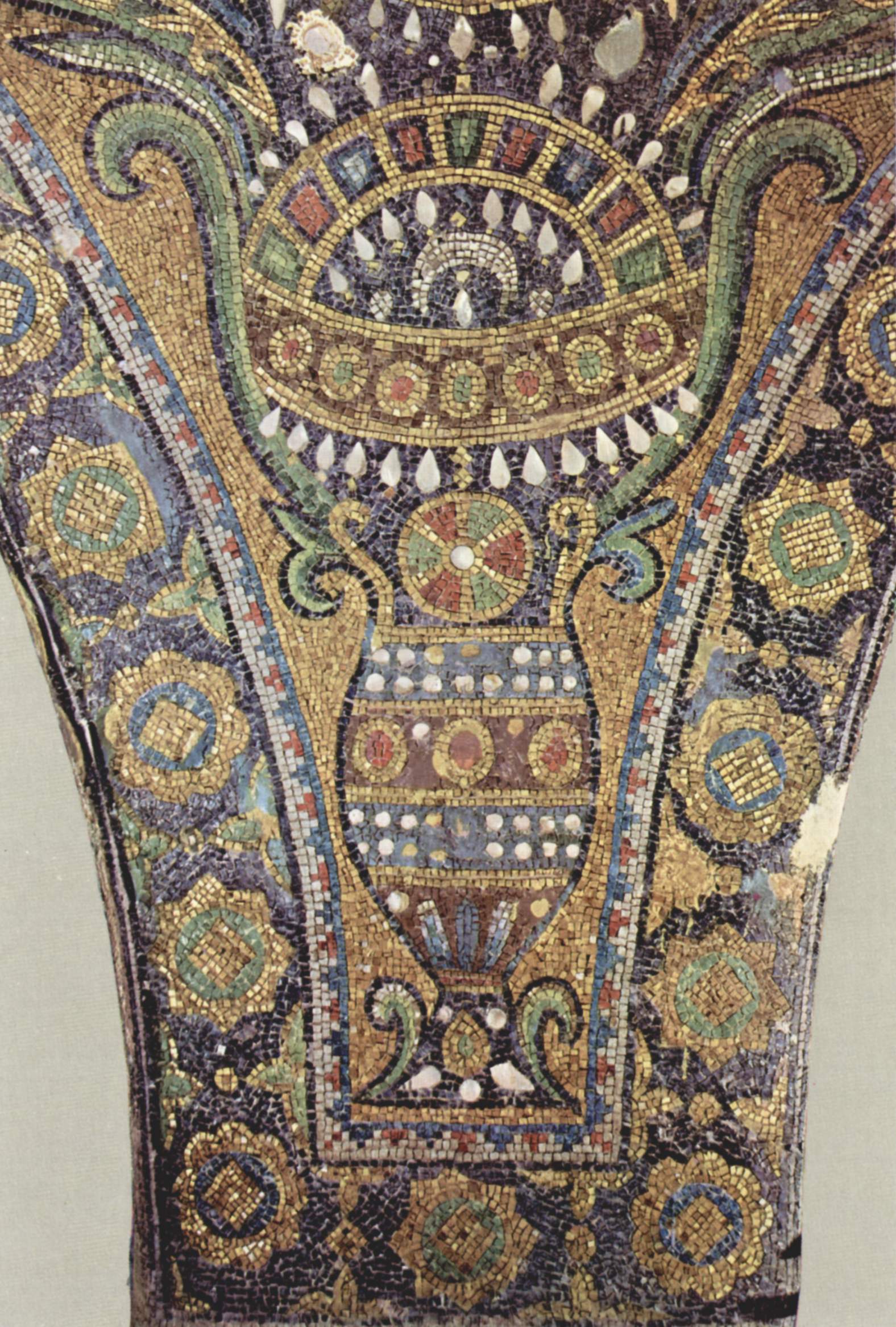
Islamic geometric art has a fourteen-century history, and almost no online account tells it accurately. The short version: it didn't emerge fully formed; it developed gradually from the 7th century onward, drawing on Roman, Byzantine, and Persian precedents, then crystallized into its formal canon during the Sunni Revival of the 11th and 12th centuries, reached its mathematical and aesthetic peak between the 13th and 16th centuries across regional flowerings in Egypt, Spain, Persia, and India, faded under European imperial pressure in the 19th century, was rediscovered by Western scholars in that same period, and is now experiencing a quiet renaissance in both traditional and contemporary forms.
This post walks through that arc with named periods, named monuments, and named people. The substance draws primarily on Wichmann and Wade's Islamic Design: A Mathematical Approach, supplemented by Necipoğlu's Topkapı Scroll, Tabbaa's Transformation of Islamic Art during the Sunni Revival, and Al-Khalili's Pathfinders.
The 7th–8th centuries: the Umayyad foundation
Islam emerged in the Arabian Peninsula in the early 7th century. The Qur'an began to be revealed to Muhammad around 610 CE; the first Muslim community migrated from Mecca to Medina in 622 (the hegira, year one of the Islamic calendar). Within a century the new religion had spread across an empire stretching from Spain to India, conquering territories with deep pre-existing artistic traditions — Byzantine in Syria, Sassanian in Persia, Roman in North Africa, Indic in South Asia.
The first Islamic dynasty, the Umayyads (661–750 CE), established their capital in Damascus and produced the earliest surviving Islamic monuments. The Dome of the Rock in Jerusalem (691), the Great Mosque of Damascus (706–715), and the desert palaces of Qusayr Amra and Qasr Mshatta show a synthesis of Byzantine mosaic technique, Sassanian decorative motifs, and emerging Islamic aesthetic priorities: a preference for symmetry, repetition, abstract pattern, and avoidance of figural imagery in religious contexts.
Geometric and arabesque elements appear in this period but haven't yet developed into the distinctive Islamic forms that would emerge later. The work is recognizably continuous with the Late Antique tradition.
The 8th–10th centuries: the Abbasid centralization
The Abbasid dynasty overthrew the Umayyads in 750 CE and moved the capital eastward to Baghdad, founding the city in 762. The Abbasid period saw two developments that would transform Islamic art permanently.
The translation movement. Under Caliph al-Ma'mun (813–833), the Bayt al-Hikma — the House of Wisdom — became a state-sponsored institution dedicated to translating the surviving Greek, Persian, and Indian scientific texts into Arabic. Euclid's Elements, Ptolemy's Almagest, and the works of Aristotle, Archimedes, and Galen entered Arabic in this period. The mathematical infrastructure that would later enable Islamic geometric design was built here. For more on this period, see how Euclid traveled to Islam.
Paper. A Chinese invention, paper was first manufactured in the Islamic world in Samarkand in the late 8th century, spreading rapidly to Baghdad and beyond. Cheap paper transformed everything — bureaucracy, scholarship, and eventually design itself. By the 10th century, craftsmen were using paper to prepare drawings before fabrication, which standardized patterns across media and let designs travel between regions and crafts. The earliest known examples of distinctly Islamic geometric design appear in late 10th-century Qur'an manuscripts believed to have originated in Baghdad.
The 11th–12th centuries: the Sunni Revival and the birth of the canon
The Abbasid Caliphate began losing political power in the 10th century, and by the early 11th the Islamic world had fragmented into rival dynasties. A religious counter-movement — the Sunni Revival — emerged in response to the rise of Shi'a power, and with it came an artistic revival that formalized the Islamic decorative canon.
What crystallized during this period: the three modes of calligraphy, geometric pattern, and abstract vegetal arabesque became the recognized vocabulary of Islamic religious art, applied consistently across all media (architecture, ceramics, textiles, manuscripts, metalwork, woodwork). The Ghaznavids in Khorasan, the Seljuks in Iran and Anatolia, the Zangids in Northern Syria, and the Ayyubids in Egypt all adopted and propagated this new style.
The historian Yasser Tabbaa, in The Transformation of Islamic Art during the Sunni Revival, argues that the formalization of geometric and arabesque ornament was not incidental — it was part of a deliberate program to mark the difference between Sunni orthodoxy and Shi'a alternatives. The decorative canon became a visible signal of religious identity.
By 1200, the canon was established. The next four centuries would see regional flowerings within this established vocabulary, each producing distinctive interpretations of the same basic grammar.
The 13th–16th centuries: the high classical period
The Mongol invasions of the 13th century devastated much of the Islamic east, sacking Baghdad in 1258 and ending the Abbasid Caliphate. But the artistic tradition survived and flourished in regional centres.
Mamluk Egypt (1250–1517). Cairo became the cultural capital of the Sunni Islamic world. The Mamluk sultans produced some of the most ambitious religious architecture ever built: the Sultan Hasan complex (1356–1363), the mosque of al-Mu'ayyad, the mosque of al-Ashraf Barsbay. Mamluk masters perfected stone-carved geometric panels, carved wood minbars with elaborate interlace patterns, and inlaid marble work of extraordinary precision. The book illumination of the Mamluk court (especially Qur'ans commissioned by Sultan Sha'ban for his mother) represents one of the peaks of the manuscript tradition. See Wichmann Ch 16 for analysis of two specific Mamluk masterpieces.
Nasrid Spain (1238–1492). The last Islamic dynasty in Spain ruled from Granada and built the Alhambra, the most studied Islamic monument outside the Middle East. The Sala del Mexuar, the Patio de los Arrayanes, the Sala de las Dos Hermanas, and the Patio de los Leones contain some of the most mathematically sophisticated zellij and stucco work ever produced. The Wichmann and Wade book devotes Chapter 8 to a worked analysis of a single Alhambra pattern.
Timurid Iran and Central Asia (1370–1507). Timur (Tamerlane) and his descendants built a brilliant culture centred on Samarkand and Herat. The Registan complex, the Shakh-i-Zindeh, and the Gur-e Amir mausoleum demonstrate the Timurid mastery of glazed tile (kashi) on a monumental scale. The decagonal patterning that distinguishes Persian geometric art reached its full development here. Modern scholarship — notably the Lu and Steinhardt 2007 Science paper — has shown that Persian craftsmen of this period had figured out quasi-crystalline tiling patterns centuries before Roger Penrose formalized them.
Mughal India (1526–1857). The Mughal emperors continued Timurid traditions while absorbing Indian elements. The Tomb of Itmad-ud-Daula, the Tomb of Humayun, the Taj Mahal, and the carved sandstone of Fatehpur Sikri demonstrate the Mughal synthesis. Inlaid marble pietra dura work reached extraordinary levels of complexity.
Safavid Iran (1501–1736). Centred on Isfahan, the Safavids produced what may be the most polychromatic Islamic architecture ever built. The Imam Mosque, the Sheikh Lotfollah Mosque, and the Friday Mosque of Isfahan use kashi tile across vast surfaces in brilliant colours that "dissolve" the buildings into pure decoration.
Ottoman Turkey (1299–1923). The Ottomans developed their own distinctive tile tradition, Iznik, characterized by painted square tiles in red, blue, green, and turquoise on white grounds, with floral arabesque dominating geometric pattern. The Süleymaniye Mosque, the Sultan Ahmed (Blue) Mosque, and the Topkapı Palace house some of the finest examples.
For region-by-region detail, the Islamic art by region posts cover each in depth.
The 17th–19th centuries: decline and stylistic shift
The post-1600 period is complicated. European colonial expansion, economic decline in many parts of the Islamic world, and shifts in patronage produced gradual changes in artistic production. Traditional crafts continued in many regions, but the great patronage of the imperial courts diminished. Quality and ambition varied dramatically by region.
The 19th-century European rediscovery of Islamic art happened against this background. As Western scholars and travelers studied Islamic monuments — often as part of imperial projects — they encountered an artistic tradition Europe had largely forgotten about.
The 19th-century European rediscovery
This is one of the strangest parts of the story. Islamic geometric art, made by Muslims over centuries for Muslim contexts, was largely "discovered" by Europe in the 19th century through three figures and a handful of publications.
Owen Jones (1809–1874) spent six months studying the Alhambra in 1834. His 1837 publication Plans, Elevations, Sections, and Details of the Alhambra was the first major Western survey of Islamic decorative art. His 1856 Grammar of Ornament compiled and analyzed Islamic patterns alongside Egyptian, Greek, Roman, Celtic, and other ornamental traditions, making Islamic geometric design accessible to European designers for the first time. The book is now in the public domain and available at archive.org.
Jules Bourgoin (1838–1908) published Les Eléments de l'art arabe: le trait des entrelacs in 1879, with 190 plates of geometric patterns analyzed and reproduced. The plates remain a standard reference and many are still in print as Dover reprints.
Prisse d'Avennes (1807–1879) documented Egyptian and Islamic art in massive folio publications between 1869 and 1877.
These Western publications fed the Arts and Crafts movement, the Vienna Secession, the early modernist explorations of pattern, and eventually the work of M.C. Escher, who visited the Alhambra in 1922 and again in 1936 and credited the trip with transforming his approach to tessellation. For more, see Owen Jones and the Western rediscovery of Islamic art.
The 20th century: mathematical formalization
The 20th century brought rigorous mathematical analysis of patterns that craftsmen had been producing intuitively for centuries. The 17 wallpaper symmetry groups were formalized in the early 20th century. Coxeter's work on regular polytopes. Conway, Burgiel, and Goodman-Strauss's The Symmetries of Things (2008) provides the modern canonical treatment. The Penrose tilings (1974) gave a name to non-periodic tessellation, which Lu and Steinhardt then traced back to 15th-century Persian girih.
Mathematicians and Islamic craftsmen, working centuries apart with very different tools, kept arriving at the same problems.
The present
Today the tradition is alive in multiple registers. Working artisans in Fez, Marrakesh, Isfahan, Yazd, Cairo, and Damascus continue to produce zellij, kashi, carved wood, and book illumination by traditional methods. Contemporary artists like Eric Broug, Adam Williamson, Jean-Marc Castéra, and others working with parametric tools and contemporary materials extend the tradition. Mathematicians continue to find new structure in the historical patterns. My own work in layered paper sits within this contemporary moment, drawing on the Maghreb tradition with software and modern materials.
The renaissance is real but quiet. For collectors and observers, the present is a particularly good time to engage with this tradition, both through traditional pieces from working master craftsmen and through contemporary interpretations.
FAQ
When did Islamic geometric art begin?
Geometric and arabesque elements appear in Islamic art from the 7th century onward, but the distinctive Islamic geometric style only crystallized during the Sunni Revival of the 11th and 12th centuries. The earliest examples of fully developed Islamic geometric design appear in late 10th-century Qur'an manuscripts believed to have been produced in Baghdad.
Who invented Islamic geometric patterns?
No single inventor. The tradition developed gradually through craftsmen working in different regions and media, with influences from pre-Islamic Byzantine, Sassanian Persian, and Late Roman art. The mathematical sophistication of the patterns increased over centuries as paper became available, as patterns were standardized in design albums, and as the underlying tradition reached maturity in the 11th and 12th centuries.
Why did Islamic geometric art spread so quickly?
Several factors. The vast geographical reach of the Islamic world from the 8th century onward, the religious and cultural cohesion that made certain art forms acceptable across regions, the early adoption of paper which standardized designs and let them travel, and the establishment of court workshops that disseminated patterns through bureaucratic and artistic networks. By the 13th century, the same patterns could be found in Spain, Egypt, Persia, and India.
Is Islamic geometric art still being made today?
Yes. Working artisans continue to produce zellij in Morocco (especially Fez), kashi tile in Iran, carved woodwork in Egypt and Turkey, and manuscript illumination in several regions. Contemporary artists are also extending the tradition into new media including parametric design, layered paper, and digital art.
Sources
- Wichmann, Brian, and David Wade. Islamic Design: A Mathematical Approach. Springer, 2017. Chapter 1 covers the historical arc.
- Tabbaa, Yasser. The Transformation of Islamic Art during the Sunni Revival. University of Washington Press, 2001.
- Necipoğlu, Gülru. The Topkapı Scroll: Geometry and Ornament in Islamic Architecture. Getty Center, 1995.
- Al-Khalili, Jim. Pathfinders: The Golden Age of Arabic Science. Allen Lane, 2012.
- Lu, Peter J., and Paul J. Steinhardt. "Decagonal and Quasi-Crystalline Tilings in Medieval Islamic Architecture." Science 315 (2007).
- Jones, Owen. The Grammar of Ornament. 1856 (public domain).
Islamic geometric art: a complete guide
A comprehensive guide to Islamic geometric art — what it is, how it developed, the mathematics behind it, the regional traditions, and how to engage with it as a collector or visitor.
11 min readArabesque vs Islamic geometric art: what's the difference?
Geometric patterns and arabesque are both core to Islamic art but they're not the same thing. A clear guide to the difference, with examples.
7 min readHow Euclid traveled to Islam: the House of Wisdom and Islamic mathematics
The 9th-century Bayt al-Hikma in Baghdad translated Greek mathematics into Arabic, laying the intellectual foundation for Islamic geometric art.
8 min read
See the work.
Mahmoud's first solo exhibit opens at Meridian Arts Centre during Toronto Doors Open, May 23–24, 2026.